
Do you know if/when you are hungry?
But if the question is expanded to all other things we crave, need or want — power, money, status, material goods — do we then truly know when we are hungry?

But if the question is expanded to all other things we crave, need or want — power, money, status, material goods — do we then truly know when we are hungry?
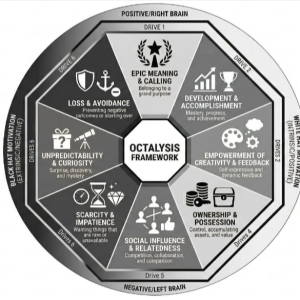
The Octalysis framework is perhaps the most complete framework for grounding gamification design efforts in reality. In this paper, I present the framework and opine on options for leveraging each element of the framework to design a gamified experience for businesses. Download or read it here (Research Gate): https://doi.org/10.13140/RG.2.2.33655.38562

Yesterday, I told the barista politely that I am going to do something about our trade deficit. The back story: I buy coffee from her, and she buys nothing from me. That’s not fair. That’s cheating. That’s abuse! I tabulated the numbers and showed the result to her. I stared at her in ‘ancestral’ disgust and she arrogantly stared back in ‘Gen Z bemusement’ – as if to say: ‘this makes no sense, none at all. I told her, to her face that her café has been very mean to me. Very mean. They have been abusing me for so long. I mean I buy a lot of things on their menu and I even know their off menu items by heart. On some days just my regular double espresso. On some others, a double espresso and whatever my guests want to drink. Yet, on some other days, I add a fat poppy seed (for my wife) or choc chip muffin (for my girls) or both, if I was headed home from the café. All they do, every time is process my order, accept my money and hand me my coffee (and muffins). That’s bad. Terrible. Baaad. I did something about it. I imposed a tariff on all my purchases from the café. A 100% tariff. This morning, I paid twice as much for my espresso. But here is the catch, the café only got the normal fare for the espresso. I got to keep in my new ‘special tariff
If you’ve ever wished for a tool that could cut through the chaos and help you focus on what really matters—understanding and applying the information—you’re not alone. That’s where NotebookLM steps in.

Do we do work for the sake of it and its direct benefits (ability to buy things and by a stretch the ability to create wealth) or as a means to live a fulfilled life (where each is free to define fulfilment)? A position I might have maintained given “my confusion” is to maintain a hybrid view of work. I seize or attempt to seize every opportunity to create something that brings me fulfilment (I have been known to go as far as crossing boundaries of organisational hierarchy to get stuff done and apologise afterwards rather than wait endlessly for permission) and sometimes, too, I simply toe the line – in the hope that something great emerges – especially one that does emerge despite our efforts to the contrary.
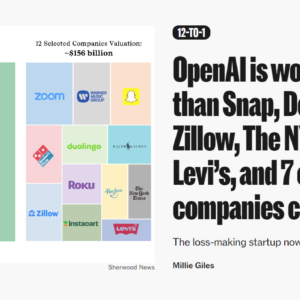
Here are three reasons, I am not bothered, two things I am doing to further ensure I do not develop any anxiety (and that you should consider as well), and one potentially irrefutable truth

The dust-up began with concerns about content access.
The revised wording seemed to grant Adobe expansive rights to peek into users’ creative treasure chests. Creatives worried that their precious work could be used for purposes far beyond what Adobe initially explained. Was this a prelude to a future where Adobe could pilfer their ideas and content to fuel their fancy new AI art tools and definitively replace creatives? The lack of clarity fueled the fire.
Misleading people in the name of opinion is unethical and should be avoided at all cost. If you feel strongly about an opinion, test it out within safety and ethical boundaries.
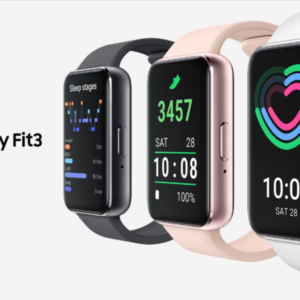
The Samsung Galaxy Fit3 is what you get when an Apple Watch dates a Samsung Galaxy Watch, and neither of them is bothered with contraception.
With a 1.6-inch AMOLED screen, the band (or tracker) as devices like this one are categorised – is a cross between a watch (but too small to be one) and a tracker or band (too large to be one).

In history, changes like this have come along often. Panic like I hinted above comes to play. But after all is said and done, we find that the panic was a waste of good energy – energy that could have been applied to some good use at the time.

Our lesson for today is from the book of Olu’ chapter 15:1-10. Let us commence: 1. Thou shall not feel entitled to another person’s time. Except where you have ‘put in some deposits’ with them, and even then that deposit must be mutually acknowledged, as opposed to being acknowledged solely by the party that places a (entitled) demand on the time of the other. When thou request for other people’s time, thou shall proceed with humility, care, and a willingness to clearly not make the demand a one sided transaction. There is nothing wrong if you feel the demand of another’s time is transactional, you take from them and you give something back. If you do not, and the other suggests it, do everyone a favour and don’t lift up your nose in disgust. That the one whose time you have demanded doesn’t acquiesce to your demand, doesn’t transfer to you the right to question there use of their own time and suggest things akin to: “you claim to be busy, but you are always online on facebook, Twitter , Whatsapp or other social media or other observable use of their time”. Becuase that right is reserved by the owner of the time and they decide how they adjudicate that right. When you are afforded another’s time or attention, do not waste it – by beating around the bush, being unclear about what you want or asking perfunctory well being questions. Align your ask to the platform via which you
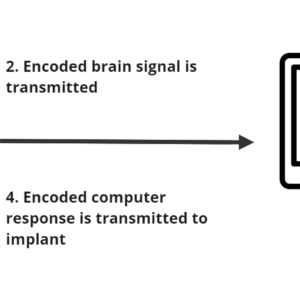
Whilst the full implications of these advancements are being debated, policies to guide the use of such are yet to be crafted – either because as is often the case innovation leapfrogs policy and governance or because the general implications of these advancements are yet to be fully understood or appreciated, one wonders if these advancements wouldn’t lead to further divide amongst the world’s population, similar to the digital divide occasioned by the evolution of digital.
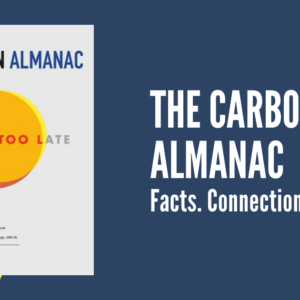
The Carbon Almanac edited and forwarded by Seth Godin is an easy-to-read mapping of the climate crisis, the resulting prognosis and actions that can be taken to sidestep some if not all of the disasters that uncontained climate change will wreak on people across the globe – the first of whom are likely to be poor people living in coastal communities, across the globe, and eventually of all of society as we know it, given the continuous nature of the changes in weather conditions that will be occasioned – rising sea levels, rising precipitation, drought etc – and the socio-economic changes that will result. The carbon Almanac is not all doom and gloom – indeed uncontained climate change is – the almanac maps the consequences of our unchecked actions as humanity that have negative effects or triggers unintended but negative changes to the global climate system and then highlights the changes we need to make as a collective and those we need to make at an individual level. Broken into 9 parts of many chapters focused on multiple themes across the climate discussion, it presents scientific findings, expert opinions, possible scenarios depending on how we choose to proceed, and calls for individuals like yourself and I to understand the issues, identify our roles and places in the broader scheme of things and to take responsible action. The almanac has an accompanying website which provides additional information to those already contained in the book, and which I suspect will be updated
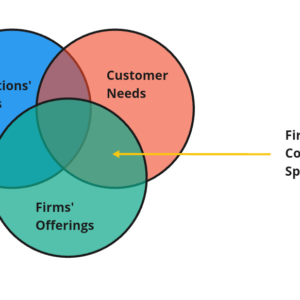
The UCS emerges when the customer needs overlap with the firm’s offering and, the competition’s offerings where those exist, are accounted for.
The portion of the Venn diagram where the customers’ needs uniquely overlap with the firm’s offerings is the firm’s UCS.
I received an email about an order I had placed with an online store of a big-name consumer electronics brand with a link to track my shipment. However, the track shipment page looks like this: No. I do not not want to look up my order, rather, I want to track it. And, no, I do not want to dig through my email to find my order number. Given the convenience I am used to, form other digital stores, a first prize would be for the hyperlinked track order button contained in the order details email sent to me to resolve to an actual order tracking page with actual details/status of the order. The execution above is not short of causing ‘customers pain’. It robs customers (at least it did in my case) the joy that accompanies the receipt of information about one’s order. Whilst this may not be enough to stop a customer from patronising next time, it is still important for those who design customer facing experience to consider making such experiences as seamless and as enjoyable as possible for the customer. Customer/user experience is beyond beautifully crafted interfaces, it goes to the art of creating enjoyable experiences as customers interact with your business (and your products).
In carrying out their duties, business analysts support businesses in clarifying their thoughts around key initiatives (sometimes even helping to determine if those key initiatives are required in the first place), devise a strategy for executing the initiative – including but not limited to identifying change management and transition needs that should be in place for the planned initiative to have a chance at succeeding – and articulate all of these in documents generally referred to as business requirements specification and known by variations of this name across different types of businesses. The majority of the time, this document details the boundaries of the initiative, identifies how the initiative connects with the business’ short to long-term strategies and the details of what needs to be built or procured in order to fulfil the needs of the initiative and invariably the needs of the business.

In the beginning, I thought it was only about the money. In our hyper-capitalistic and materialistic world, where even the most basic materials (food, shelter, and mobility) all cost a dime or two – and add to that, the marketing industrial complex raising the art of signalling to the sky, further fuelling our need to fork out more money to procure not the most fundamental in form and function of the things that satisfy our basic needs, but the same things packaged in ways that signal to others that we know what is good we are better than them.
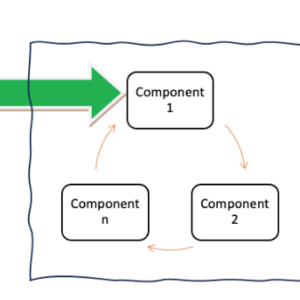
This is a forming idea. Could it be possible that for a constrained system, that requires external inputs for an increase in the total value generated by the system to occur, whereas it is possible to grow the value of one component, such that the value generated by that component can trigger performance in at least one more component, which in turn triggers performance in any other component in the system, such that even when losses are accounted for, the overall performance of the system improves with or without continued reliance on the external trigger?

Whilst I hate labels, for the exact reason that labels put one in a box . A badge of scepticism is one I am willing to wear boldly and proudly. My reasons?
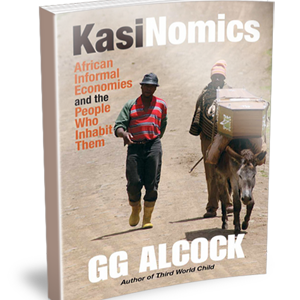
Introduction Kasinomics is a book authored by GG Alcock, which explores the informal economy of the townships in South Africa. Alcock is a social entrepreneur, and he has lived in the townships for over two decades, which makes him well-versed with the dynamics of the informal economy. In this book, Alcock offers insights into how the township economy operates, how people make a living, and how they have adapted to the difficult conditions of the townships. This paper will review the book by discussing its key topics of discussion, the lessons that can be learned from it, and concluding on its overall value. Key topics of discussions One of the main topics of discussion in Kasinomics is the informal economy of the townships. Alcock argues that the informal economy is a significant contributor to the country’s economy and that it plays a crucial role in the survival of township residents. He shows that the township economy is built on networks of trust and social connections, which are essential for people to find employment, start businesses, and survive in the harsh economic conditions of the townships. Another topic of discussion in the book is the role of government in the township economy. Alcock argues that the government has largely ignored the informal economy, which has resulted in the growth of illegal and informal activities. He shows that the government needs to recognize the importance of the informal economy and create policies that support its growth and development. Alcock also explores the

But if the question is expanded to all other things we crave, need or want — power, money, status, material goods — do we then truly know when we are hungry?
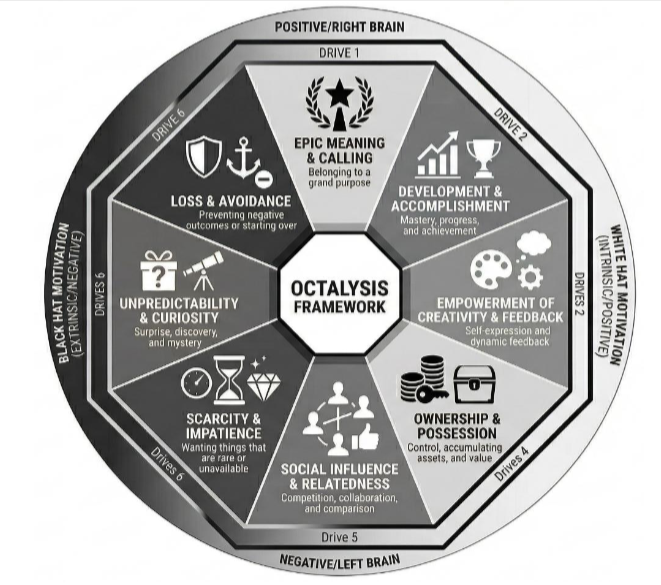
The Octalysis framework is perhaps the most complete framework for grounding gamification design efforts in reality. In this paper, I present the framework and opine

Yesterday, I told the barista politely that I am going to do something about our trade deficit. The back story: I buy coffee from her,

If you’ve ever wished for a tool that could cut through the chaos and help you focus on what really matters—understanding and applying the information—you’re not alone. That’s where NotebookLM steps in.