DiscourseWednesday: Attaining technological singularity & the brands of the future

Technological Singularity – is a hypothetical point in the future when technological growth becomes uncontrollable and irreversible, resulting in unfathomable changes to human civilization (Wikipedia). Many envisage this time as one that will be similar to those depicted in the terminator movies (sadly this author didn’t see any of those movies and this may partly be responsible for some of the optimism he bears about the future). In that point in time, we will have robot police. Robot teachers. Robot citizens. Visible robots. Invisible robots. All kinds. But most will have highly specialised functions and most will not pass across as robots. However, there are two major possible scenarios on offer and several variations of these – think of it as spectrum of possibilities. One major scenario is that machines take over, enslave people and rule over them, making humans do as they – the machines – want/like. Another is that intelligent machines will take away the need for humans to perform repetitive (e.g. bookkeeping, medical diagnosis, teaching etc.), dangerous (underground mining, maintaining nuclear reactors in nuclear power stations), hard (road and bridge constructions, farming etc.) tasks – freeing humans up for more mentally tasking duties and a lot of leisure. Truth is that no one knows for sure and my best guess is that we will arrive at a mixture or combined variation of the two the scenarios above. We will have automation at scale. Entire industries will disappear. And some of the robots will not be visible – think of

Read More »

On Agility

The problem existed in the business I worked in, a few years ago. Information technology projects often fail habitually – they get cancelled or the final product doesn’t meet the objectives stated? at initiation. On assignment to lead a project soon after I joined this business, I elected to experiment with a project management methodology that will allow the project team deliver the project outcomes in  small increments over short periods of time. We (the project team and I and some of our key stakeholders) agreed with the project sponsor that we try out this approach and see if it solves the problem described above. We proceeded to select a small segment of the business to get involved with us in testing each delivered increment and provide feedback which can be factored back into the work we were doing  and ensure each increment provides useful outcomes for the business. The small section of business which participated in testing the increments were then tasked with being ambassadors for the project team and to convince colleagues from other areas of the business to start to use the incremental outputs from the project and to provide structured feedback in town-halls we organised to introduce new project outcomes. Our project took as long as most other projects in the business had taken, but did not suffer the rejection often associated with similar projects in the past as we had early feedback from real users, factored these feedback back into the work planned, and continuously released features that users can begin to use, albeit in small but useful increments. The project management approach we had

Read More »

Design Thinking: oh…what now?

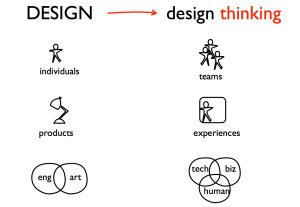
I smell fads from a distance – doesn’t help that I poke my nose into all things I can poke it into. Some fads are good though in that when they generate sufficient buzz, they get the attention of executives who may then allocate resources to the stuff that their staff may have been asking for or talking about for some time and which didn’t make any sense to these execs – especially from a quarterly growth target point of view – until the buzz. Buzzes are often the result of a new fad getting popular on its own (well, there is such thing as organic spread or word of mouth) or term throwing, sharply dressed consultants from top consulting firms doing brown bag sessions or other executive instructing session(s) with the right executives in the room. Other fads, just serve the ego of their protagonists and delivers no real value to others. Design thinking (given the buzz it is currently enjoying) is yet another fad, albeit a useful fad! So, what exactly is design thinking? In simple terms, it is putting the customer front and centre in the development of new products and/or services and/or features or modifying existing ones. Duh… that’s what all product development teams should do, build stuff that customers need (or want) and can pay for and not what those product teams want. Half the time, we don’t know what these things are. And some other times, we can read the tea leaves of customer feedback,

Read More »

To the caves we returned: The state of affairs of election results in Nigeria. And possible next step?

I have been left in a lurch all weekend, with no official or parallel consolidated view of the election results from the Nigerian general elections held this past Saturday. Given all the sophistication of the people of Nigeria, it is her complexities that bothers the more than casual observer. With millions of internet users (actual numbers are disputed) and possibly a million professionals in all walks of human endeavor doting the global landscape who are Nigerians and who stand shoulder to shoulder with their peers in delivering value to businesses and or communities they serve. It beats me that getting the official or a verified/verifiable parallel results of the 2019 presidential elections  nearly 48 hours after polls closed, has proven impossible. Social media is agog with a variance of the campaign antics of most supporters of the two main contending parties in the presidential race as well as the jokers that littered the land. The antics changed slightly from ‘my man is better than yours’ or ‘my man will beat yours’ to: my man has beaten your man and here is proof – but most proofs are spoofs, figments of the imaginations or machinations of the bearer. In my search for credible results, the official INEC election page between 8.00am SAST and a few minutes ago (12.00noon SAST) continues to display a countdown to the 2019 General elections – possibly the Governorship and State House of Assembly elections scheduled for next week. But isn’t there an apparent design problem here?

Read More »

Projects and Project Management

For many years, I have had to repeatedly answer questions on what projects are and what the disciplined practice of project management is and I thought to write a quick and short primer here. This is no way exhaustive, but aimed at answering some of the questions many have about the discipline and possible help frame the next set of questions and help readers set about finding answers to this questions. Project management (PM) is not the fine art of using Microsoft projects, IBM jazz or similar. Those are tools, used in managing projects – and are collectively referred to PMIS – project management information systems. In most mature environments, project administrators are saddled with tending to these systems. And sincerely, it isn’t a bad place to start to cut your PM teeth, but if you stop there, then don’t take yourself seriously or anybody at that who refers to you as a project manager. You are not one, you are simply a project administrator. Clear? What then is project management? Project management is the disciplined management approach to creating value for the enterprise. Projects are temporary endeavours aimed at creating business value by: taking advantage of new technology – to extend the business’ capability to break into a new target market and/or extend reach within an existing market, introduce efficiency and/or block leakages; meeting new regulatory requirement; Projects do not continue perpetually – continuous and repeatable activities collectively constitute business operations. It is a project if: Has a start

Read More »

User Stories – a condiment for success in delivery efforts

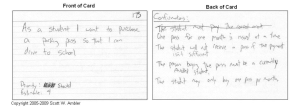
What: ‘User Stories’ is intended to break business requirements into their most basic unit, stating what is needed, by an actor, in other for an action to be completed. They generally follow the format below: <user> needs (MUST, COULD, WOULD) to be able to <Action> because <Reason> Why: Useful mostly in (pseudo-)agile delivery environments where delivery is planned to be in short iterative bursts, in which each iteration delivers usable features of a solution being delivered. In these situations, user stories will serve the purpose of atomising each required feature and sub-feature where applicable and enable the team (the owner, the business analyst, the development team, the test team and onlookers) to prioritise these for delivery using a preferred method, including but not limited to Kanban. User stories, can easily replace complex user journeys and use case documentations, remove the complexity of determining the sufficient level of detail of a business requirement and often solves the problem of ownership. When: The best time to document user stories for a project or product is soon after stakeholders have been identified and usually before the first line of code is written or other executionary step is taken. How: There isn’t a silver bullet and each team should come up with an approach that best suits them – this can be arrived at following several experimentation effort. However, in addition to the general format provided above, teams MUST have the liberty to: Prioritise each user story for delivery; Bundle features together for delivery following some logic


Read More »

I am not associated with Mr. Olalekan Oshunkoya’s the ‘a for the many’ project

[This disclaimer was first published on the 18th December 2018, on facebook. It is accessible at this link: https://www.facebook.com/story.php?story_fbid=10156245822163235&id=601038234] Hello World – Kindly note that I am not a collaborator or supporter of the ‘a Nigeria for the Many’ project being touted by one Mr. Olalekan Oshunkoya. It came to my attention last week Monday, 11 December 2018, that I was listed as a collaborator on this project’s website – and possibly other marketing materials. A development I not only found strange, but also appalling as I had expressly refused to be involved in all of Mr. Olalekan Oshunkoya‘s recent projects which are all incompetent charades and pretences of working for the good of the people and of the land. I have also sought to distance myself from Mr. Oshunkoya given his continued demonstration of poor judgement as regards these matters and his gross incapacity to follow through on initiatives he starts as well as having developed a well established system of ulterior motives: with Mr. Oshunkoya what you get is never the same as what you see. When he approached me on Monday, October 1, 2018 to speak at his event three days later, I made my disinterest in being involved in this project clear – I have attached the email below. [1] Upon coming to know that my image and name are being used in marketing materials for the programme, I wrote Mr. Oshunkoya on WhatsApp [2] to remove me from the website immediately – screenshot also attached. It is a full week since I made that

Read More »

Africa’s middle class

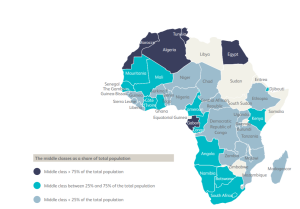
IPSOS For CFAO’s The middle classes in Africa: Realities and challenges AfDB’s The Middle of the Pyramid: Dynamics of the Middle Class in Africa MoneyWeb’s The rising, aspirant middle class (paywall) QZ’s It’s time to decide what being middle class in Africa really means QZ’s The hype by big business about a fast-growing African middle class has been misleading     Note: Cover image copied from the IPSOS for CFAO’s report

Read More »

Readings

So the MBA imposes a lot of readings on every subject making up the programme. My career ambitions places similar impositions on me. Whilst some of my writings are not meant for immediate public consumption given that the data making up my work are often privileged and meant for the public – at least for now, I have elected to share some of the fascinating secondary data sources I have come across in my reading journey in a new category I am tagging Readings on this blog. Enjoy and feel free to leave comments with feedback and suggestions. Let us make the circle bigger! — Note: Cover image shamelessly copied from here

Read More »

Ilé tí a bá fi ito mo

Originally posted to OrderPaper.NG, the premier digital publication connection citizens of Nigeria with their representatives in parliament. However, reproduced below with slight modifications based on a discussion between some respectable users of the Yoruba language here on my facebook timeline. Growing up, my father taught me to read and write the Yoruba language, in as much as he taught me a few other things, which one day I hope to put in a book I might title, ‘Lessons of My Father’. Yes, an obvious play on Barack’s ‘Dreams from My Father’. With the gift of reading and writing the language of my ancestors came the blessings of reading such legends as D.O Fagunwa’s ‘Ogboju Ode n’nu Igbo Irunmole,’ a treatise I must have read a few times in its original text as a teenager and in English when I laid hands on Prof. Wole Soyinka’s English translation of the same work, titled: ‘The Forest of a Thousand Daemons.’ This piece isn’t about D.O Fagunwa or our erudite scholar and dramatist – for that, please read: D. O. Fagunwa’s ‘Literary Exertions In Yoruba Cosmology‘. This is about a Yoruba adage whose meaning eluded me for years. Ilé tí a bá fi it?? m?n, i?ri? ló ma wo. For years, I believed the adage transliterated to: The house (or other structure) in which a child is raised, eventually collapses in the hands of the morning dew or dewdrops. The adage jumps at me, each time I walked the ancient town of Ago-Iwoye,

Read More »

When marketing becomes strategy (or a key strategic pillar) – the case of Cialis’ challenge of Viagra’s market

The strategic question for Lilly Icos was whether it could influence how physicians perceived the importance of the criteria (longer lasting effects). The positioning was hotly debated prior to launch: Should the company centre its marketing strategy on Cialis’s lack of side effects, given that safety was already one of the two key criteria (met by the incumbents including the market leader viagra)? I have come to believe that strategic advantage -a better product, a better means of production, a better brand etc.  – may exist for a business, but communicating these advantage(s) well may in turn lead to or increase the opportunity to sell this advantage(s) to customers. Marketing can thus be a strategic advantage. A careful marketing adventure may result in careful associations – which may inturn turn out to be a clear advantage. Viagra was marketed as an erectile dysfunction (ED) drug. ED is real and serious, a lot of men (young and old) struggle with it daily, globally. Viagra’s marketing worked until a competitor that addressed a fundamental psychological need came along. Enter Cialis. When Cialis showed up, it showed up as a romance enhancer – almost equal in measure to sending your partners flowers and chocolates and/or executing on a candle lit dinner for two – to the man’s ego that is :-). …The new criterion of purchase—marketed as romance and intimacy rather than sex—caught on. Young men love pissing contests.  Filling out your subscription for an ED med is almost like admitting you can not

Read More »

Business analysts are not professional scribes

It is easy to reduce business analysts to scribes – those human recorders who type out the dictates of business into a business approved template. Which is then signed off by business and forced down IS/IT’s throat for implementation and all the other good things that happen in downstream. But is that really the function of the BA organisation and the analysts that walk its corridors? In many enterprises, the BA organisation does not exist. And in most others, it exists in name only. And yet in many others, business analysts are mere scribes, who simply document aspirations and ambitions of business and to take the blame where such ambitions end up as the type of statistics describing project failures. I have sat back many times and watched the craft of business analysis reduced to writing specifications for new systems or parts thereof and or documenting the what the business thinks it needs in a business requirements document. Most of these scenarios were job interviews – and you know what they say about fighting your interviewers? Where I could fight, I did. Putting down my feet firmly and insisting on more value driven work which may lead to or not lead to the writing of a requirements spec. – this occurs mostly on the job, where one has developed the balls to query the status quo. But I have been burned a few times. Those times being those where there is very little analysis maturity within the organisation or where

Read More »

What if I have been had?

So I took my bicycle in for service earlier today and the experience left me wondering. The technician accepted the bicycle and then told me to leave my name and phone number on a piece of paper, so he can call me tomorrow when the bike is ready for collection. There is No records of this transaction! Until I pay, that is. I went into analyst mode. Wondering how a business as big as this one, selling sporting equipment and offering an adjacent service not have a peace of mind inducing system in place for handling equipment service requests? I offered to pay for the service now. I was bent on creating a record of my presence in the store and put my bicycle on the stores’ record keeping system. ‘No. That will mess up my paper work…’ the technician explains, politely. Why? I asked. ‘All bicycles that have been paid for are not expected on the shop floor. I will have too much explaining to do.’ I was uncomfortable. And I still am. What happens to me if this guy for some reasons don’t show up for work tomorrow? And the day after? No, I wish him no ill. What happens if this guy gets possessed and decides to borrow my bicycle and things go south? There is no proof I left my bicycle at this shop for service. What happens if the store is forced into a situation where it has to make an insurance claim, how does

Read More »

Nigeria, ‘our journey is long’

I have read with some concern the news that the Nigeria Labour Congress (the NLC) is picketing MTN Nigeria and may have damaged equipment and facilities at some of the businesses locations in the country and even threatened staff and may have caused physical injury directly or otherwise to some staff of the corporation – the same people whose interest the NLC is supposed to be protecting. It is shattering that labour negotiations in 2018 is being conducted in such an uncivil if not barbaric manner, further increasing the risk of reduced credibility of Nigeria as an investment destination. Whilst I sympathise with staff who feel their rights to unionize is being infringed upon by the company – something the company has denied – it remains an important point that labour discussions should first be addressed with relevant parties within the dictates of civility and tantrums like those the labour union is throwing can be a last resort. However, one gets concerned that the rights to unionise is still such a big deal at a time when the very core principles of labour is changing drastically and adjacent areas of thoughts like labour relations will change too in a few years. We seem to not be factoring the changing dynamics of work into our actions today and we seem casually prepared for the future of work, if at all. But to stay with the current labour issue, a few questions arise: isn’t there a labour law that should guide employee

Read More »

Of forged certificates, criminal political class and docile citizenry

First appeared in the OrderPaper.Ng The Nigeria political space is a theatre of absurdities. Absurdities at a level that will be unbelievable, albeit unconceivable to those from climes dubbed developed democracies. What with a President who seem to have been asleep for the better part of the three years he has been in office for; and leaves for medical holidays without a note as to how long he will be out for and what ailments ails him. And how does one explain an executive arm of government that appears to have been using state resources to prosecute political agendas as the recent Supreme Court decision on Saraki’s asset declaration case has suggested? Or a state where one capitalist group – cattle herders – freely infringes on the rights of common citizens, never mind that these citizens own rights to be capitalist as well? And a silent Commander-in-Chief, who in the wake of mass murders of citizens by other citizens in peacetime for various reasons ranging from grazing land to border clashes between communities that have lived peacefully together for decades? But I digress. Premium Times, a digital publication run by some of Nigeria’s remaining youthful prisoners of conscience, revealed in an investigative piece that our dear Minister of Finance, Kemi Adeosun, may have forged her exemption from the compulsory national youth service, the one-year performance of civic duties expected of all Nigerian graduates under the age of thirty. Personally, I have very little respect for the programme in its current shape,

Read More »

From ‘calling to action’ to getting ‘the action’ – automate as much as you can and reduce attrition

I see some facebook Ads (I won’t be surprised if the same happens across channels open to these ‘culprits’), asking users to make a phone call and listing a name and a telephone number to call. That is so paper age – remember the days we are handed fliers in traffic and we have to call or email a person to get a service/product advertised on the flier? That mentality doesn’t have a place in the online age! Most channels offer opportunities for seamless data collection and for targets to indicate interest – for the example above, facebook offers facebook lead forms. Take advantage of these. Your user should journey something like this at a minimum – and there are additional opportunities to optimise, but take this as 101. Credits: 1. Featured image (the image that shows up when you share this article on social image, was copied from Siege Fitness’ website here) Note: 1. Be kind when re-using content from this website and (a) credit me for my work and (b) link back. If you choose otherwise, well, then, you are a THIEF! 2. How to cite this post: Author: ASUNI, O. Title:From ‘calling to action’ to getting ‘the action’ – automate as much as you can and reduce attrition Publication: Reflections…of life and its’ exigencies! date: February, 2018 In-text: (Asuni, 2018)

Read More »

The long road from idea to revenue

(Warning: May not make a lot of sense, also, don’t take personal) First things first: idea is nothing! it is simply that thing we all have in our heads, sometimes even have on paper and that we hope it/they will somehow turn us into multi-millionaires and build us an empire. If ideas were really a thing, you’d be a millionaire many times over, already. You get it now don’t you 🙂 So you are not special in any way because you carry one or several ideas in your head – everybody in that crowded bus with you do as well. Second thing, next: Execution is not everything. But it is a lot of things. Luck/good fortune, timing (another name for luck), sheer market readiness/maturity (another name for luck), network of supporters (not really another name for luck, but…) also play a part – a huge part. You get this? If not, let’s look at examples: MySpace? Facebook? One failed the other did not, you think only execution made the difference? Nah! Execution played a role – a huge role. But a few other things acted in favour of Facebook. Market readiness/maturity played a part, product placement (part of strategy execution) played a role. Network effect. LUCK. Funding from strategic partners (part strategy execution, part LUCK – as strategic partners may have their hands full and elect not to take Facebook on). Still unconvinced? Stop right here and go and make better use of your time (caught the joke?) Customer is king. Yes

Read More »

Fitting culture to strategy: the competing values framework as a lens to visualise change

A few weeks ago, I published an article on LinkedIn partly in partial fulfillment of the requirements for the completion of the Henley Business School’s Managing People Module and partly out of interest (the interest part deals with the choice of the subject I wrote about). I am reproducing the article below – for those of you that follow this blog but may not be connected with me on LinkedIn. All organisations have a ‘way they do things’. These ways are collectively called culture or organisational culture (or similar monikers). Organisational culture, stem from a number of sources – including the founders philosophy (think Google, where in the early days engineers were given more priority over product directions than was allowed the project manager types – http://www.howgoogleworks.net/), deliberately (when consultants are brought in to help devise one) and by evolution (when things just happen in response to external and sometimes internal stimuli) – and gradually changes organically over the years as the organisation grows or diminishes or as its internal and external context changes. The Competing Values Framework (CPF), introduced by Quinn, R.E. & Rohrbaugh, J, in their work titled: A Spatial Model of Effectiveness Criteria: Towards a Competing Values Approach to Organisational Analysis, published in 1983, provides a lens through which to view the organisation and its culture (current culture and the desired culture). The authors argue that organisations have 4 possible dominant cultures. These cultures are clan, adhocracy, hierarchical and market. Each prioritises people (employees), customers, the way work

Read More »

On Agile: SCRUM

This piece is yet another installment in my series on Agile methods and mindsets. Each article in the series progressively elaborates on the subject and shouldn’t be consumed on their own, but along with the other entries. The form in which the articles are split isn’t along any lines except for those of my convenience. At a later stage, I may re-organise the content so one article flows into the other, however, my primary concern for now is to share the knowledge in my head as quickly as possible. Please please feel free to share your thoughts and excitement in the comment section below. Thank you. Agile is a project management approach that was first adopted by cool people building software. Today, is adopted to drive the delivery of different types of projects irrespective of the domain. The Agile Manifesto, puts forward 12 principles to guide software teams (and really any team) that uses or plans to adopt the Agile mindset. Some key advantages of Agile is that the teams detect potential failure(s) in delivering the project early and can then take steps to remedy the situation. The team(s) understand change and are quite adaptable to it. And the customer knows what is being built, sees the work being done take shape and can thus re-evaluate their priorities, bring new information that can impact the product being built to the attention of the project team, commence the process for making changes etc. At a very high level, Agile, lets teams build and deliver

Read More »
On Trend

Most Popular Stories

Making tariffs great again

Yesterday, I told the barista politely that I am going to do something about our trade deficit. The back story: I buy coffee from her,

Reflections on work and being busy?

Do we do work for the sake of it and its direct benefits (ability to buy things and by a stretch the ability to create wealth) or as a means to live a fulfilled life (where each is free to define fulfilment)? A position I might have maintained given “my confusion” is to maintain a hybrid view of work. I seize or attempt to seize every opportunity to create something that brings me fulfilment (I have been known to go as far as crossing boundaries of organisational hierarchy to get stuff done and apologise afterwards rather than wait endlessly for permission) and sometimes, too, I simply toe the line – in the hope that something great emerges – especially one that does emerge despite our efforts to the contrary.