BA Summit 2021

The largest gathering of business analysts and business analysis in the Southern hemisphere is around the corner! This year, like last year, the conference will be virtual. However, it promises to exceed ALL expectations. The speaker line up is epic and so are the topics up for presentations and discussions. The conference is themed and organized around the accelerated changes to business and personal lives globally – occasioned by yes, the pandemic.    

Read More »

Eleven lessons from 11 years of marriage

There is no substitute for open, honest conversations. ALWAYS keep the environment safe – as open and honest conversations only exist and thrive of the fertile ground of safety. Sometimes, all you need to do is listen. The time for solutioning will come and you will have the opportunity to say what you think could have been done better or avoided etc. You are your partner’s biggest cheerleader. Don’t cede that role, irrespective of what is going on in the world. There is always a common ground. Find it. Don’t take yourself too seriously. Seriously, there is more to life that your ego. Trust. Don’t lose it. Tough to regain. Love. With your whole heart. True, no one is perfect, but love shouldn’t be conditional – especially in marriage. Introspect. You, like most of the world, are a work in progress. Always be learning and willing to learn. By no means an exhaustive list. But these comes readily to mind.

Read More »

Visual Communication – series teaser

Visual communication brings to life the saying that a picture is worth more than a thousand words. Product and project teams, especially those that are geographically dispersed and has a diversity of spoken and written language never underestimate the power that visual communication brings into aligning team members. There are a myriad of visual communication tools, techniques, and frameworks – ranging from the standardized to the general. In a series of videos to follow, I will be deep diving into some of these tools (Aris, Visio, Pencil, Miro, Mural), techniques, and frameworks (mind-mapping, BPMN, UML etc.).  

Read More »

Plussing!

Popularized by the wiz, Walt Disney. Plussing is a concept applied by product managers to make a good product great. It is easy to apply. You have a product in the market that customers are using (or you have just introduced what you believe is the MVP for your product). You ‘plus’ by planning, scheduling and releasing additional features to the product. With the aim of making a good product great! Or converting a bad product to a good one. To ‘plus’ you don’t thumb-suck what to add. Rather you rely on qualitative and quantitative measures to choose between the many possibly options to add to your product. That’s where research methods like talking to the customers, reading the bug reports, interviewing colleagues in Ops, monitoring industry trends, monitoring macro-economic conditions etc., come to play.

Read More »

Anecdotes

Short, self contained stories or reports of true events or people. Useful as a way to remember key points. Useless as a way of conveying important information. Useless because for those without context of what the anecdote summarises, the risk of misunderstanding rises significantly. So when creating anecdotes, include as much breadth and depth as you can manage. And when consuming anecdotes from others, ask a few questions: what is this really about? is this really plausible? are there supporting information out there If you do, chances are, you will not believe and make fundamental decisions on half or never truths. — Image credit: https://medium.com/@philcross/the-bias-in-anecdote-6bca97f950c5

Read More »

How big is it?

Is it even real? The problem you are seeking to solve. Does it exist outside of your imagination. And that of your team? Is it in the bug report? Are the customers are asking for it? Are the customers using your product in a way that makes it clear you have a problem, or they have a problem, you need to solve? Are your competition doing it? Are there customers happy as result? Is fixing it worth all the time and energy you are devoting for it? Is it affecting a enough customers, that addressing it is justified? Whilst, I am not advocating analysis paralysis, answering these questions does help you begin the journey of selecting from the many new features you may think your customers need.

Read More »

MoSCoW

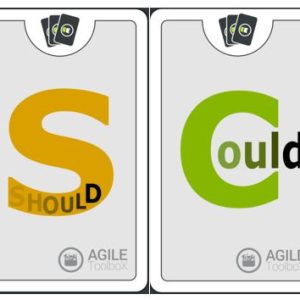
One of my favorite prioritisation tools. Short for: MUST haves. High priority items that the product/opportunity or challenge being addressed MUST have. These are product launch blockers. If you don’t have them in place, you don’t launch. Example: in South Africa and European Union, for any customer facing product, alignment to the privacy regulations (POPI and GDPR respectively) is non-negotiable. This is a MUST have! SHOULD haves. Important. But not sufficient to prevent product release. If your product were a flight, these items will be business class passengers, given that MUST haves are in first class. COULD haves. Nice to haves. Can do without them really. WON’T haves. Items totally out of scope.   Image credit: https://www.scrumdesk.com/prioritization-moscow/moscow-cards/

Read More »

What are you afraid of starting?

A YouTube channel? A course? A new career? A baking class? Sometimes, the fear we feel is healthy and can urge us on albeit carefully. Sometimes, it is crippling and it is the reason we never start or even try. Irrespective of the the type of of fear or the issue that is causing it, you may find that taking the time to begin to explore the options however slowly, however carefully, may diminish the fear. Start now. A step at a time.

Read More »

Research

There are three groups of people who do research: 1. Those who research on social media (they run with the information, because they saw it on [insert social media of choice]) – this group, do no research. 2. Those who see it on Google [most don’t even go past the summary included in the search result] and/or those who ask others to Google it 3. Those who understand and apply the scientific method. The group includes the ton of people in academic and industrial laborites, in R&D units of business and in academia – to list a few.   I come in peace!

Read More »

My strength – perhaps my weakness too

Yeah – I know that quip so well. Make your weakness sound like a strength wearing a veil. So we go: I am a workaholic. I know I should do more to balance work and life, but I can not just stop myself whenever I have a deadline. Truth is, a lot of people have become adept seeing through this façade. I don’t even ask this question again when I interview people, because, what is the point? I design my interviews to tease out the weaknesses and the strengths any ways. But that is not what I am talking about here, really. I am pondering my own strengths and I find that one key strength – being able to read the room – is also one of my biggest weaknesses. I am able to read the room well. Thus able to stand or sit or jump as may be appropriate. But when I can not, I get frustrated. And sometimes, I fail totally to read the room, until I might have crossed a line. And equally unsettling:  I read too much into the room. Do you know your weaknesses and strengths? What do you do with the knowledge? Let’s discuss.

Read More »

Has fact become a spectrum?

Many years ago, someone said something I could only describe as outrageous. Curious as to the source, I was met with: “I read it on the internet”. I was gobsmacked. But it has gotten worse, today. People, entire clans even, run to the market with ideas, positions and assertions – yes, plainly because they read it on the internet. Worse, when confronted with questions requiring the proponents to think a bot more about their “I read it on the internet”, you get brickwalled. We now live in the times of alternative facts (Kelly-Anne Conway), my truth not your truth (the vast majority of people dueling it out on the streets of social media) and post-truth (some smart academic whose names I have forgotten). In a time where, truth is absolutely relative. Where fact is no longer fact, once you switch the audience. Where blue is all shades of red. We live in very difficult times.

Read More »

What is the unit of productivity?

An hour? A work week? A month? The output? Time has seconds (defined in terms of the radiation frequency at which atoms of the element cesium change from one state to another). Days has hours (a culmination of seconds into minutes and minutes into hours or 3600 secs) Distance has meters (defined as the length of the path travelled by light in a vacuum in 1/299 792 458 of a second). What is it for productivity?  

Read More »

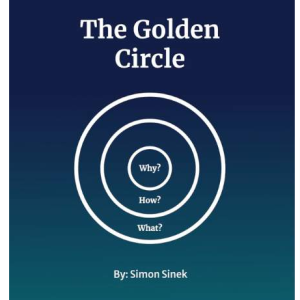
The Golden Circle By Simon Sinek – Applied to Product Development

Simon Sinek’s Golden Circle works as a good framework to guide the work of product teams. Starting with the core vision/value of the business (and/or product) – the value we seek to create – and tying this with a eloquent approach to HOW we enable the value creation process in the hands of our customers, will eventually guide us into deciding WHAT we build. To achieve the HOWs and WHATs of our products, we then need to understand the broad groupings along such lines as demography and psychographics our target audience (persona development) in order to tie them with use-cases to the features we will build.

Read More »

There is more to life than being right… than winning… than being the star of the moment

To be right. To win. To be the reigning star of the minute. Winning, being right all the time, being seen as the star of the moment, all  have benefits. At a minimum, we are flooded with the good hormone: dopamine; in the instant. But at what cost? The cost of burning important bridges? Of loosing friends and the support and interests of co-travelers? Do we choose to win the battle and lose the war? Have we chosen to be right, over being decent? Winning is good. We should all aspire towards it. But we should, within the boundaries of decency.

Read More »

Unintended Consequences

All actions have a resulting reaction. It is a fundamental law of life and well entrenched in the laws of Physics. The witty clapback. The recoil of the gun. The sudden forward movement of the human head when a car comes to a sudden stop. Customer walking away after a terrible experience. The customer using the product in ways other than originally intended (yes, that was how the teabag was invented – read about Thomas Sullivan and his accidental invention or his invention with an unintended but useful consequence) Whilst we are in full control of our actions, we may not be in full control of the reactions to it. What is important is what we do with the unintended consequences. Another important thing is to not ignore these consequences.. Sometimes they include opportunities for improvements, diversification, change or even sales. As you make the most of your actions. Also, optimise to leverage the unintended outcomes.

Read More »

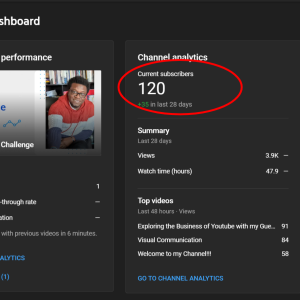
Meet my YouTube Channel

I started posting content to my YouTube channel early this year. It started with me posting recordings from previous speaking engagements. Now that I have some following on there, I have started to script and record content deliberately for the community that is now evolving around the channel. Here the channel trailer. Enjoy. And please consider subscribing to the channel and opt-in to get notifications when I post a new video. Thank you.

Read More »

Breaking point

Elasticity is the characteristic of materials, allowing them return to form after a measure of stress. Think of elastic bands – you stretch them (stress) and they return to form (when you ease off the stress/stretching event). But every material has a point, which when stressed past, deformity – loss of form integrity – sets in. Further past that point is a point where the material not only deforms but dis integrates. This rule applies to all materials. Though different materials can absorb varying degrees of stress, each has its breaking point. So does our bodies. So does our minds.

Read More »

Do you care eough?

Caring about customers is not something we say. It is something we do. Keeping the customer on long waits at the help desk. Sending out customer facing emails from noreply email address. Not honouring the customers; do not contact mandate. Not resolving the customers problem on he first or second visit. Being dishonest with the customer. Making he customer fill long forms. Redirecting customers to FAQs and self-service portals – requiring a level of technical know-how that a customer didn’t sign up for. Are the things we do, to show how little we care about our customers. The customers know too. That is why is they will ditch you as soon as there is a more accessible, better supported alternative. Show you care. Do it. Don’t just say it.

Read More »

Something on thoughtfulness

For the most part, I didn’t set out to be a thoughtful person. It came natural. A consequence of trying to be a decent human. I recall one of my first experiences of being called thoughtful. My friend, who was quite older sent me a message that he has lost his father. Tradition demands a befitting funeral for the elderly who has passed. I was a way in college and can not travel to be with my friend as he organises the final rites for his late dad. I was a poor college kid. Had very little money to my name. I reached into my pocket money and purchased ‘mobile airtime’ and sent him the vouchers with a message similar to the below: “Kindly accept this little token from me. I hope it helps in a small way in your running arounds to give baba a befitting farewell.” He replied: This is quite thoughtful of you. In my head, I wasn’t setting out for a thoughtfulness badge, I was just being a decent friend.

Read More »
On Trend

Most Popular Stories

Making tariffs great again

Yesterday, I told the barista politely that I am going to do something about our trade deficit. The back story: I buy coffee from her,

Reflections on work and being busy?

Do we do work for the sake of it and its direct benefits (ability to buy things and by a stretch the ability to create wealth) or as a means to live a fulfilled life (where each is free to define fulfilment)? A position I might have maintained given “my confusion” is to maintain a hybrid view of work. I seize or attempt to seize every opportunity to create something that brings me fulfilment (I have been known to go as far as crossing boundaries of organisational hierarchy to get stuff done and apologise afterwards rather than wait endlessly for permission) and sometimes, too, I simply toe the line – in the hope that something great emerges – especially one that does emerge despite our efforts to the contrary.